
The real estate market has closed out a year of 2022 full of fluctuations and ups and downs. Together with Great House in Vietnam we review the most notable events of 2022 to get an overall view of the real estate market, so as to prepare and anticipate for the road ahead.
1. Land Fever Spreads in Early 2022
At the end of 2021, the Government promoted public investment, and a series of key infrastructure works in localities were approved and pushed forward. Together with attractive interest rates, this is also the reason the smoldering land fevers of late 2021 gradually spread into early 2022. The land fevers at the start of the year occurred in many localities across the country, from Ba Ria – Vung Tau, Lam Dong, Quang Binh, Quang Tri, Khanh Hoa to Thanh Hoa, Bac Giang, Bac Ninh, Hai Phong, Quang Ninh…

However, in each locality, land fever occurred only locally in areas with information on infrastructure planning. The land fevers also passed quickly, over a short time, in the face of strong intervention by local authorities. According to a Q2/2022 market report by a unit in the market, land plot search volume in the quarter fell by about 13% from the Q2/2021 peak, an indicator that the land plot fever has passed its hot zone and is in the process of completing a cycle. From the end of Q2 to the end of the year, the land plot market cooled and fell into a lull in the face of many market events related to credit policy, rising interest rates, bond problems…
2. Apartment Prices Surge in Hanoi and Ho Chi Minh City in 2022
Along with the land fever, apartment prices in Hanoi and Ho Chi Minh City kept rising from 2021 into the first half of 2022 due to scarce supply, and not excluding rising purchase demand because of low interest rates, the mentality of home ownership and a stable living space after the pandemic shock.
According to the market report for the first 5 months of the year, apartment prices in Hanoi recorded an average increase of about 8% compared with 2021, a considerably higher increase than 2-3 years before the Covid-19 pandemic (an average of about 5%). Primary projects on the market could be counted on one's fingers, with prices setting a new level 10-20% higher than projects launched earlier in the same area.
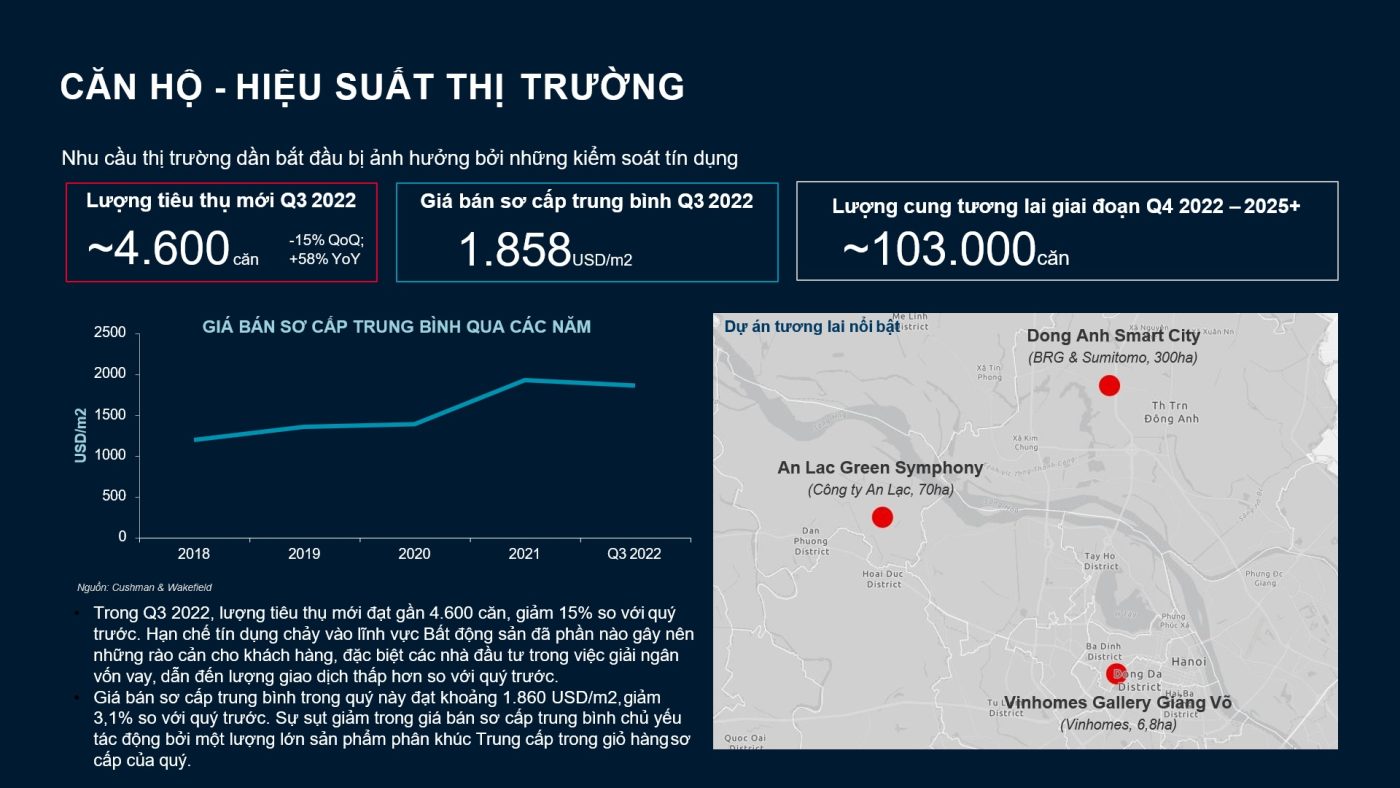
In Ho Chi Minh City, although apartment prices had risen consecutively for many previous years, they still rose a further 3-5%, especially in primary projects. The affordable apartment type, priced under VND 30,000,000/m², almost disappeared from the primary market. The prices of newly offered projects set a price level of VND 35,000,000–38,000,000/m² and above. Meanwhile, the supply of apartment projects is extremely limited because of legal bottlenecks and high input costs…, which further maintains the price-increase trend.
3. The Rental Market Recovers Strongly in 2022
With the Covid-19 pandemic pushed back, in mid-March Vietnam officially reopened international flights and goods transport. Life gradually returned to its rhythm, causing demand to rent homes, business premises and company offices to surge strongly.
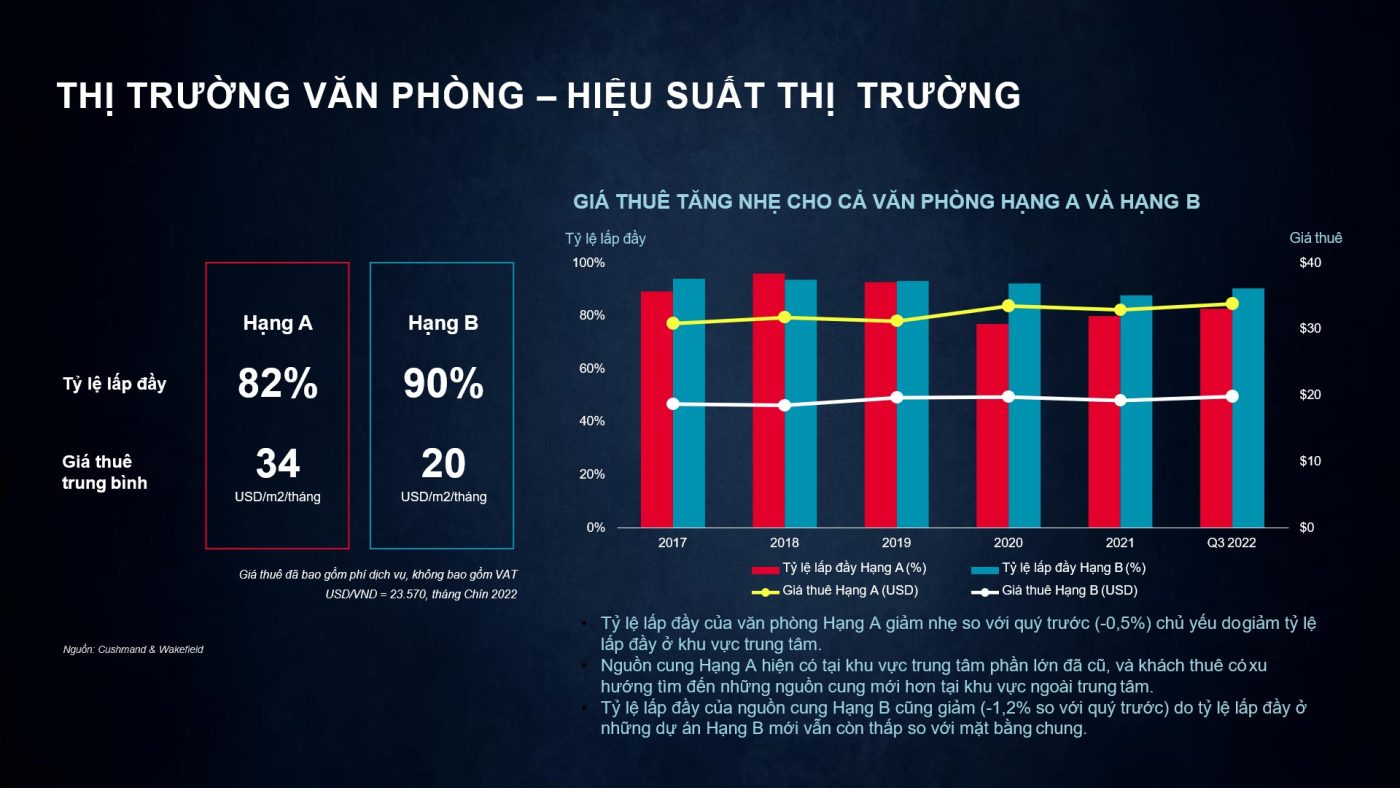
According to the market report, in the first 5 months of 2022 searches for rental real estate rose 14% over the same period of 2021. The recovery was clearest in the country's two largest markets, Ho Chi Minh City and Hanoi. In Ho Chi Minh City, searches for office rental rose 112%; street-front houses rose 67% over the same period of 2021. Similarly, in Hanoi, searches for street-front houses for rent rose 97%; office rental rose 89%; boarding houses and shops for rent rose 6-15% over the same period of 2021.
At present, rental real estate remains a bright spot of the 2022 market, with both demand and rental prices recovering strongly, making up for the long decline caused by the pandemic.
4. Land Auction Deposit Forfeitures and the Real Estate Corporate Bond Problem
Around mid-January 2022, the real estate market was abuzz when the leadership of Tan Hoang Minh Group sent a letter asking to unilaterally terminate the contract to buy the auction-winning land plot in Thu Thiem worth VND 24.5 trillion.
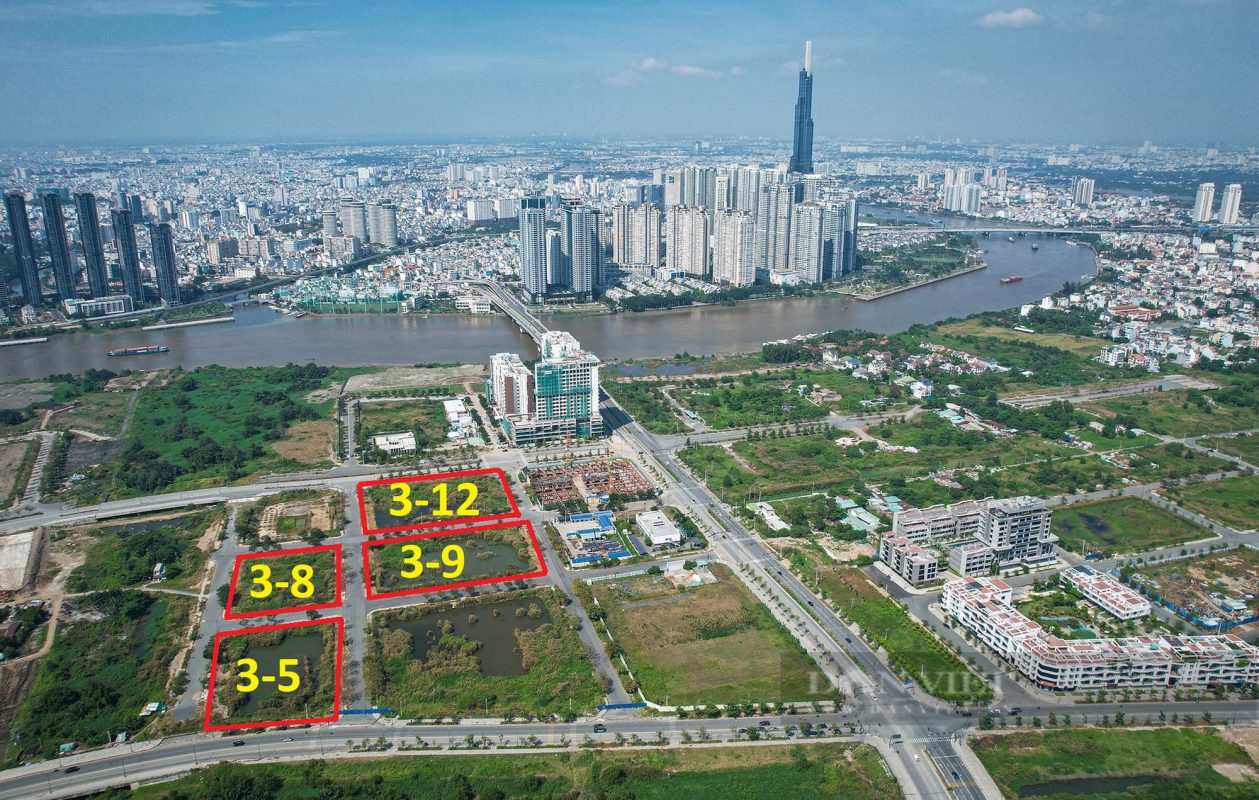
Not only Tan Hoang Minh, but then all 3 other enterprises that won Thu Thiem land auctions also forfeited their deposits after repeatedly committing to fulfill the financial obligations of the land auction. In total, 4 enterprises unilaterally forfeited deposits on golden land plots in Thu Thiem. These plots were handed back to the Ho Chi Minh City Land Fund Development Center for management. Besides the consequence of “noise” in market prices, this forfeiture also tested the real financial capacity of real estate investors, and is also an indicator of enterprise health. In fact, since the second half of the year, many real estate enterprises dependent on bank loan capital could not manage their cash flow amid credit tightening, rising interest rates and a liquidity jam.

In particular, the cases involving Van Thinh Phat and real estate corporate bonds were like a blow that pushed market sentiment even lower. According to experts, these cases show that the quality of real estate corporate bonds is at an alarming level, issued with no collateral, no credit rating and no payment guarantee. Real estate enterprises issuing bonds at high interest rates carry a great many risks. When an enterprise has problems, banks as well as individual and small investors holding the bonds can all be dragged in, or even go bankrupt.
5. Revised Land Law Draft Submitted to the National Assembly
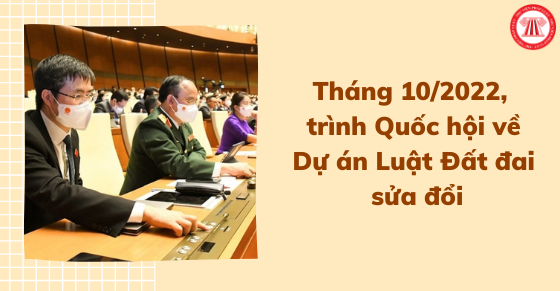
According to the Government's submission, the draft revised Land Law submitted to the National Assembly has 16 chapters and 245 articles, of which 28 articles are kept unchanged; 184 are amended; 41 are newly added and 8 are repealed.
The new, important policies of the draft revised Land Law cover 11 contents. First, specific provisions on the rights and responsibilities of the State and the rights and obligations of citizens regarding land. Second, perfecting the provisions on the rights of land users. Third, on land-use planning and plans.
Fourth, on land recovery and policies for compensation, support and resettlement. Fifth, on land allocation, land lease and change of land-use purpose. Sixth, on financial mechanisms and policies and land prices; regulating the relationship among the State, the market and society. Seventh, on developing land funds and the land-use-right market.
Eighth, on the management and use of agricultural land; resolving existing limitations in managing land originating from agricultural and forestry farms. Ninth, provisions on the management and use of multi-purpose land. Tenth, provisions on digital transformation and administrative reform. Eleventh, inspection, examination, supervision and handling of violations; resolving land disputes, complaints and denunciations.
After the period of public consultation (from 3/1/2023 to the end of 15/3/2023), the Government will absorb feedback and revise and finalize the draft revised Land Law, reporting to the Standing Committee of the National Assembly to submit to the National Assembly at the 5th Session of the 15th National Assembly (May 2023).
6. Controversial Proposal on Apartment Ownership Term
In the draft revised Housing Law, the Ministry of Construction proposes two options: not stipulating a term for shared-housing ownership, and stipulating a term.
The term stipulation is proposed in four directions: ownership for 70 years; if built on leased land, the ownership term equals the leased land-use term; long-term ownership; stipulating the apartment ownership term in the Certificate, and when the ownership term expires, the apartment owners no longer have ownership of that apartment building and must hand the land-use right for the apartment building back to the State for demolition and rebuilding of other works.
On this issue, the Chairman of the Ho Chi Minh City Real Estate Association (HoREA), Mr. Le Hoang Chau, said that the proposal to add provisions on the apartment ownership term is not appropriate for cases where apartment buildings are built on land with stable long-term residential use, and the apartment owners have stable long-term residential land-use rights over the land area on which the apartment complex is built under land law. This creates a number of inadequacies, incompatible with the 2013 Land Law, the 2014 Housing Law and the 2015 Civil Code.
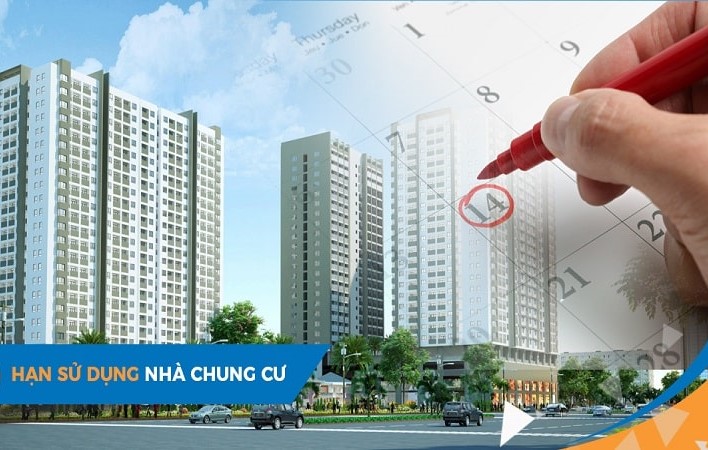
“Regulating apartment ownership with a term does not meet the thoughts and aspirations of people who want to own an apartment attached to stable long-term residential land-use rights, because homes and apartments are assets of very great value that homeowners want to leave to their children and grandchildren to inherit later,” Mr. Le Hoang Chau stressed.
According to Mr. Chau, this regulation leads to a distinction in home ownership rights, whereby individual houses (villas, townhouses) attached to residential land are recognized as having “ownership with no fixed term”, while apartments are only recognized as having “ownership with a term”. This could “benefit” investors of low-rise housing projects (villas, townhouses) and obstruct the development of high-rise apartments in urban areas.
7. Real Estate Credit “Running Out of Room” in 2022
In 2022, although the pandemic was basically under control, real estate prices continued to rise irrationally hot. For that reason, in April 2022 the State Bank of Vietnam issued Official Letter No. 1976 to credit institutions and foreign bank branches, requiring them to strictly implement a number of matters to ensure operational safety and to control credit extended to risky sectors such as real estate investment and business, securities, BOT and BT transport projects, and corporate bonds.

Data from the State Bank show that by the end of April 2022, the total outstanding loans to the real estate sector of credit institutions reached VND 2,288,278 billion, up 10.19% from the end of 2021, accounting for 20.44% of total outstanding loans to the economy, with a bad debt ratio of 1.62%.
In practice, a number of banks also announced they were halting real estate lending on the grounds of running out of credit limits (room). The credit control has clearly shown its impact on the real estate market as market liquidity jammed.
8. The Government Establishes a Working Group to Resolve Difficulties for Real Estate
In November 2022, the Prime Minister established a Working Group to resolve obstacles for enterprises and a number of localities in implementing real estate projects.
Under the Decision signed by Deputy Prime Minister Le Van Thanh on 17/11, the Working Group consists of members who are leaders of the construction, banking, finance, planning and investment, natural resources and environment, and public security sectors. Specifically, the head of the Working Group is Minister of Construction Nguyen Thanh Nghi, and the deputy heads are Deputy Governor of the State Bank Dao Minh Tu and Deputy Minister of Construction Nguyen Van Sinh.
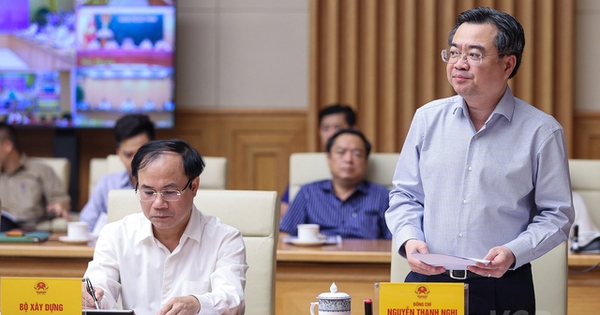
The members include: Deputy Minister of Public Security Luong Tam Quang; Deputy Chairman of the Government Office Nguyen Cao Luc; Deputy Minister of Finance Nguyen Duc Chi; Deputy Minister of Natural Resources and Environment Le Minh Ngan; Deputy Minister of Planning and Investment Nguyen Thi Bich Ngoc.
The Working Group will review and guide the resolution of obstacles in implementing real estate projects for localities and enterprises in Hanoi, Ho Chi Minh City and a number of other provinces and cities.
Real estate is a sector contributing 11% of GDP, with organic relationships with many industries and creating many jobs. However, in recent times this market has faced many difficulties, transactions have fallen sharply, and many projects have stalled and not continued because of capital starvation since the beginning of this year.
According to many experts, one of the main causes is a bottleneck in capital flows. Among them, credit is restricted; bond issuance is also not promising as regulators have made many moves to tighten the market, and many enterprises that raised bonds improperly have been handled…
 English
 Vietnamese
 Chinese
 Korean


